Health and Safety Policy for House Movers and Residential Moving Teams
 This Health and Safety Policy sets out the commitment of our house movers and moving crews to protect the health, safety and welfare of employees, customers and others affected by our operations. House movers, residential movers and home moving teams must follow the procedures outlined here to reduce risk during packing, loading, transport and unloading. The aim is to create a consistent, safe approach to every relocation task and to promote a culture where safety is an integral part of every move.
We apply a clear scope covering all activities conducted by the moving company, including pre-move surveys, on-site packing, furniture dismantling, van operation and delivery. This policy applies to permanent staff, temporary workers and subcontracted moving crews. The responsibilities described below are intended to support compliance with safe working practices while remaining adaptable across different job sizes, from single-room relocations to larger residential moves.
![A man and woman, both smiling, are in a well-lit indoor space preparing for house removals in a residential area near [POSTCODE] or [TOWN]. The man wears a light blue shirt and is holding three cardboard boxes stacked together, displaying a cheerful expression. The woman, dressed in a checkered shirt, stands beside him, slightly behind, and is also holding the boxes, with her hair shoulder-length and blonde. In the background, there are additional cardboard boxes, one labeled 'FRAGILE' with red lettering, indicating delicate contents. The boxes are made of brown corrugated cardboard, some sealed with packing tape. To the right, a metal or plastic hand trolley can be partially seen, used for transporting heavy items. The environment appears to be an interior space, possibly a living room or hallway, with light-colored walls and minimal decoration, including a small potted plant visible at the far right. The photo suggests a professional house removal process conducted by House Movers, highlighting careful handling of household items during a move within the local area.](/pub/_photos/removals/f2000289792.jpg) Purpose and objectives include preventing injuries, minimising property damage and ensuring effective emergency response. The policy explains roles and responsibilities for supervisors, drivers, movers and packers. It also describes hazard identification, risk assessments, provision of personal protective equipment (PPE), safe manual handling procedures and the use of mechanical aids. Every member of the team ??? whether called a mover, removalist, house moving attendant or home moving operative ??? should be familiar with these expectations.
Purpose and objectives include preventing injuries, minimising property damage and ensuring effective emergency response. The policy explains roles and responsibilities for supervisors, drivers, movers and packers. It also describes hazard identification, risk assessments, provision of personal protective equipment (PPE), safe manual handling procedures and the use of mechanical aids. Every member of the team ??? whether called a mover, removalist, house moving attendant or home moving operative ??? should be familiar with these expectations.
The
Roles and Responsibilities
section clarifies who does what. Managers must ensure adequate resources, training and monitoring. Crew leaders are responsible for conducting pre-shift briefings and ensuring safe systems of work are followed. Individual movers are required to follow instructions, report hazards and use PPE correctly. Drivers must ensure vehicles are roadworthy and loads are secured. Safety leadership is shared: everyone has a role in recognising risks and stopping work if an unsafe situation arises.Risk management for house moving operations includes routine risk assessments and dynamic assessments on arrival at each site. Common risks include manual handling injuries, slips and trips, vehicle incidents, falling objects and adverse weather. Controls include team lifting protocols, use of trolleys and lifting straps, non-slip footwear, secure loading methods and clear pedestrian routes at properties. The policy emphasises practical, proportionate controls rather than excessive paperwork.
 Training and competency are essential. All personnel involved in removals must receive induction training and regular refresher sessions covering: safe lifting techniques, correct use of moving equipment, vehicle loading standards, ladder safety and incident reporting. Training must be documented, and competency should be assessed in the field. Mentoring and on-the-job coaching help embed safe working practices among junior movers and new joiners.
Equipment and vehicle safety: Vehicles used by removal teams must be maintained, inspected and loaded in line with safe loading plans. Equipment such as ramps, trolleys, dollies, lifting belts and restraints should be inspected before use and removed from service if defective. House moving vehicles must have appropriate signage and securement systems to prevent load shift during transit. Drivers should conduct pre-trip checks and report any vehicle defects immediately.
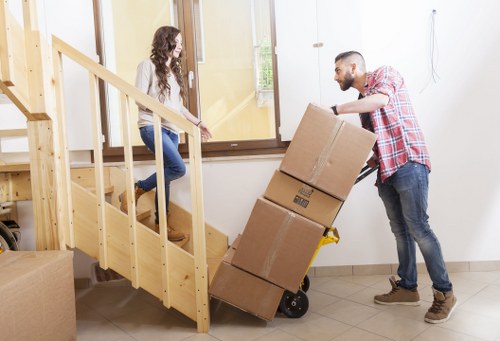
 Manual handling and ergonomics are central to preventing musculoskeletal injuries. The policy requires that movers use team lifts for heavy or awkward items, adopt correct posture, and use mechanical aids whenever possible. Tasks should be planned to reduce repetition, and breaks scheduled to prevent fatigue. Supervisors should rotate tasks to limit repetitive strain and watch for early signs of discomfort among staff.
 Incident reporting and emergency response: All incidents, near misses and property damage events must be reported promptly and investigated to identify root causes. The policy sets out a simple reporting process, immediate first-aid arrangements and escalation paths for more serious incidents. Emergency procedures ??? including dealing with fire, spillage, medical emergencies and vehicle collisions ??? should be known to all staff and practiced periodically. Learning from incidents is used to update risk assessments and improve procedures.
Monitoring, Review and Continuous Improvement
Performance is monitored through site inspections, routine audits and feedback from crew leaders. The policy is reviewed periodically and updated to reflect changes in equipment, techniques or operating conditions. House moving companies must ensure documented records of inspections, maintenance, training and incident investigations are kept and accessible for internal review.Leadership commitment underpins this policy: senior managers and supervisors must lead by example, promote safe working practices and support workers raising safety concerns. The policy emphasises practical solutions that protect movers and customers while delivering efficient moving services. It should be treated as a living document that evolves with operational experience.
In summary, this health and safety policy for house movers, removal teams and residential moving staff defines clear responsibilities, practical controls and a framework for continual improvement. By following the measures set out here ??? effective training, safe equipment use, robust risk assessment and prompt incident response ??? moving crews can reduce harm, protect property and maintain high standards of workplace safety for every relocation.